Journey to the Roof of the World, Discover the Mystical Beauty of Tibet
Discover the extraordinary landscapes, ancient monasteries, sacred lakes and Himalayan culture of Tibet with Oswal Air Travels. A Tibet tour package is ideal for travellers seeking a destination that combines spiritual heritage, dramatic mountain scenery, traditional Tibetan life and unforgettable high-altitude experiences.
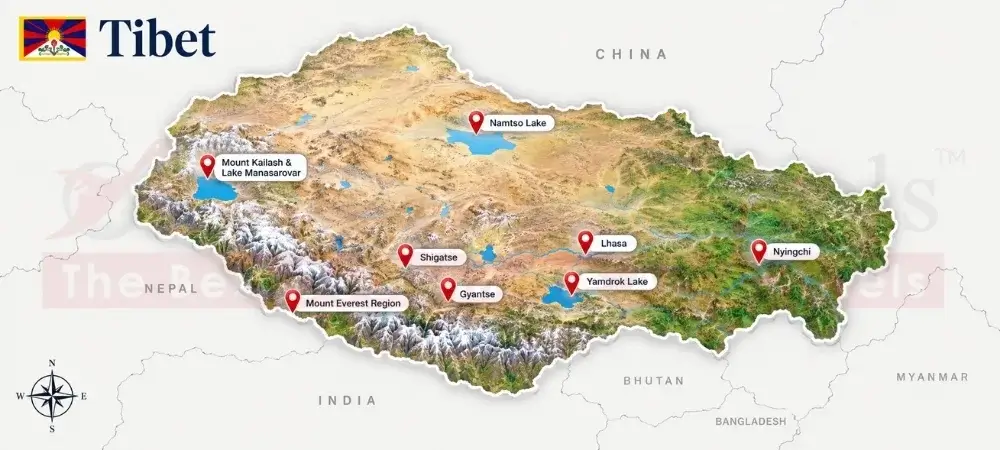
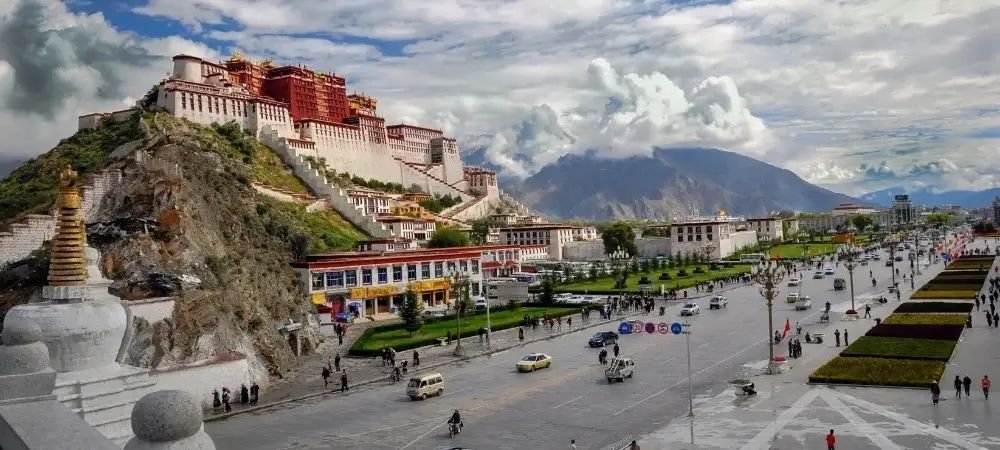
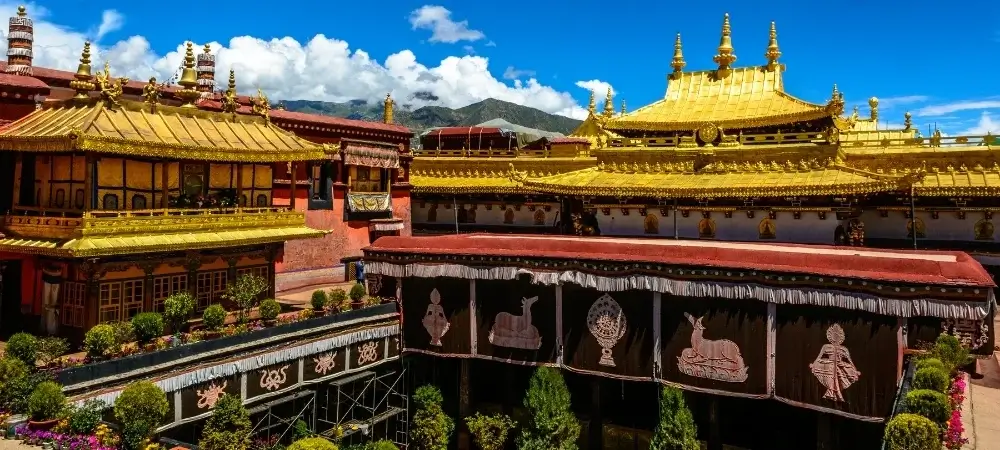
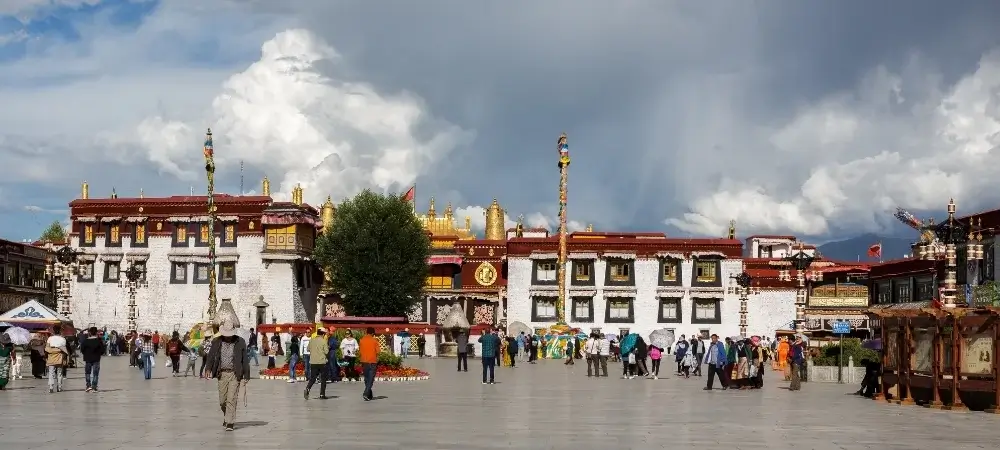
Known for its vast plateau and the towering Himalayas, Tibet offers a distinctive travel experience. The historic city of Lhasa introduces visitors to magnificent landmarks such as the Potala Palace, Jokhang Lhasa offers a glimpse of Tibet's spiritual life through its historic temples and the lively streets of Barkhor. Outside the capital, visitors can admire the blue waters of Yamdrok Lake, the dramatic mountain scenery near Mount Everest and the centuries-old monasteries of Shigatse, each reflecting a distinct part of Tibet's heritage.
Oswal Air Travels helps you organise a Tibet holiday that suits your schedule, accommodation preferences, budget and places of interest. We can also guide you through the relevant documentation and entry formalities based on your nationality and planned travel route.
Geography of Tibet
Tibet is a high-altitude region of Central Asia where immense mountain ranges, icy lakes and expansive rocky terrain define the scenery of the Tibetan Plateau. The Tibet Autonomous Region, under Chinese administration, covers a substantial area of the plateau's southern and western sections. The broader Tibetan cultural region also encompasses areas beyond the autonomous region's administrative borders.
With large stretches of land located over 4,000 metres above sea level, Tibet experiences weather patterns and environmental conditions associated with extreme elevations. Travellers should allow time to acclimatise, as physical activity may feel more strenuous at these heights. Along the southern boundary, the Himalayas create a formidable mountain range, while the western and northern regions feature the Karakoram and other rugged high-altitude systems.
Major geographical features
- Mountain ranges: The Himalayas, Gangdise Range, Nyenchen Tanglha Range and Karakoram contribute to the region's dramatic terrain.
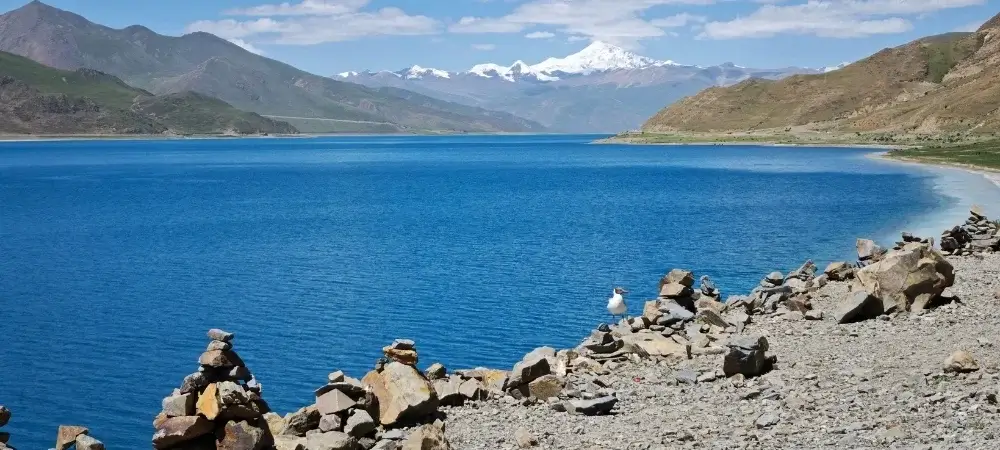
- High-altitude lakes: Yamdrok Lake, Namtso Lake and the sacred Lake Manasarovar are among its most recognised natural landmarks.
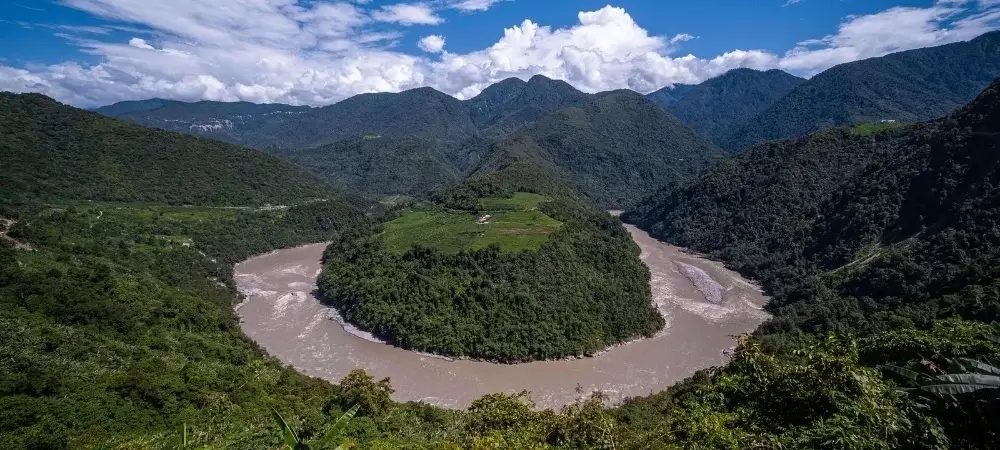
- Rivers: The Yarlung Tsangpo travels across southern Tibet before crossing into India, where it takes the name Brahmaputra. The Tibetan Plateau is also an important source of several major rivers that sustain communities and ecosystems across Asia.
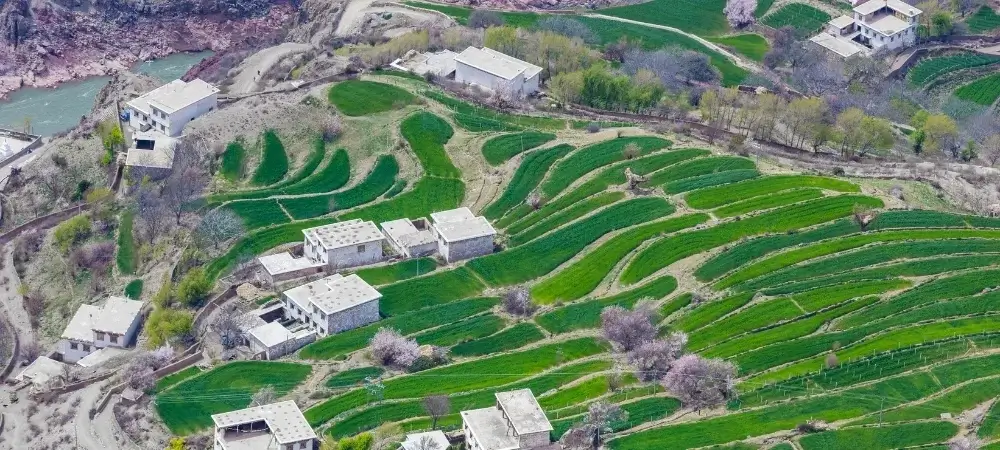
- Valleys and Grasslands: The fertile stretches around Lhasa and the Yarlung Tsangpo River support villages and farming activities. In northern Tibet, open grasslands provide grazing grounds for livestock and remain central to the traditional way of life of local herding communities.
- Glaciers and Snowfields: Vast ice formations and snow-covered slopes add to the grandeur of Tibet's high mountains. These glaciers also serve as important sources of water for rivers and surrounding ecosystems.
- Forests: Southeastern areas, particularly around Nyingchi, contain greener valleys and forested slopes that contrast with the drier central plateau.
How Tibet's geography shapes its tourism
Tibet's elevation and terrain influence almost every part of a journey. Mountain passes can experience sudden weather changes, while long distances between destinations make realistic itineraries essential. Travellers should allow time to acclimatise before visiting higher-altitude locations.
Lhasa serves as the main starting point for numerous Tibet holidays, offering travellers a practical base from which to discover nearby attractions and plan excursions to other parts of the region. Depending on the length of the holiday, available permits and prevailing road conditions, visitors may extend their route to destinations such as Gyantse, Shigatse, Yamdrok Lake and approved viewing areas near Mount Everest.
Depending on current entry rules and authorised access points, visitors may travel to Tibet by plane, train or road. Route planning should account for available transport services, the necessary permits and sufficient time for the body to adapt to the thin air at high elevations.
Why Visit Tibet?
Scenic Beauty
Tibet is an appealing destination for travellers who enjoy expansive mountain views, peaceful lakes and landscapes that feel far removed from busy cities.
- Admire the turquoise waters of Yamdrok Lake.
- Enjoy panoramic views of the Himalayas.
- Explore the open landscapes surrounding Namtso Lake when access permits.
- Photograph snow-covered peaks, highland grasslands and traditional settlements.
- Experience the changing scenery along mountain roads.
Travel Insight
Bright, clear conditions can provide excellent opportunities to photograph Tibet's mountain scenery. However, visibility may change unexpectedly, so allow extra time in your schedule and consider alternative viewing locations instead of depending on one specific day for the best views.
Adventure Activities
A Tibet adventure tour can combine scenic drives, trekking and outdoor exploration. The type of activity should match your fitness, acclimatisation and the conditions at your destination.
- Trek on approved routes with appropriate guides.
- Explore designated walking trails around monasteries and valleys.
- Visit permitted Everest-region viewpoints.
- Experience high-altitude landscapes without undertaking demanding expeditions.
- Travel along scenic mountain roads that wind through lofty passes and offer sweeping views of Tibet's dramatic terrain.
Local Culture
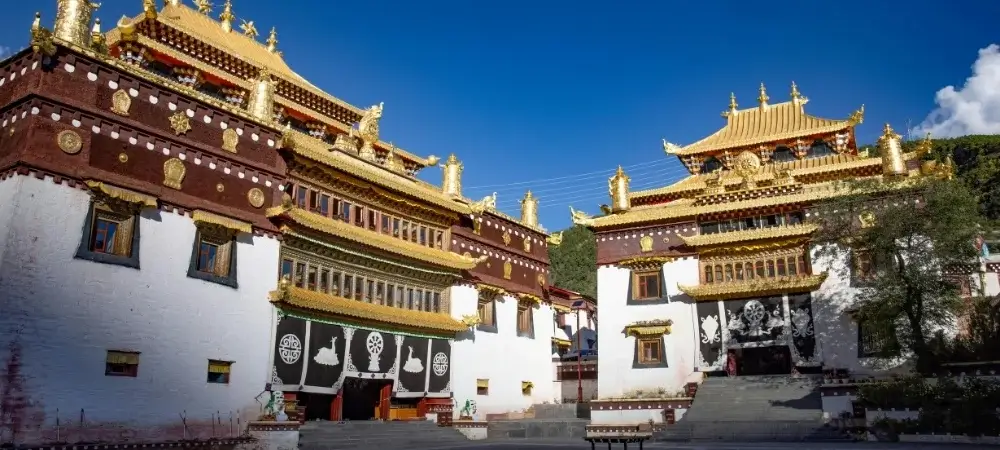
Tibetan culture is closely connected with Buddhist traditions, monasteries, community life, traditional arts and the highland environment.
- Visit historic monasteries and religious landmarks.
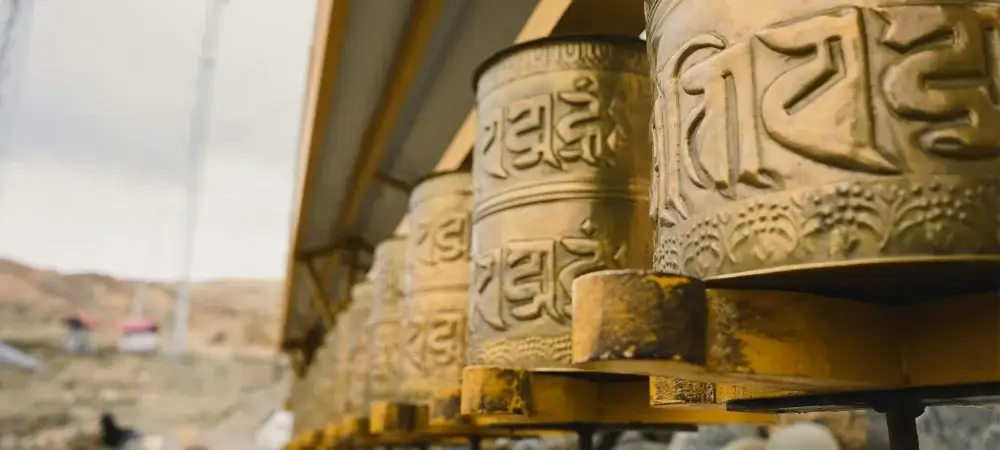
- Observe prayer wheels, prayer flags and traditional architecture.
- Explore local markets and handicraft shops.
- Learn about Tibetan Buddhist art, murals and religious objects.
- Experience traditional music, dance and festival celebrations when available.
Travel Insight
Dress respectfully at religious sites, follow photography restrictions and avoid interrupting prayer ceremonies.
Food
The food of Tibet has developed around its cold, high-altitude environment and traditional herding lifestyle. Local dishes commonly feature ingredients that are suited to the region's climate and long-established food practices.
- Try momo, Tibetan-style dumplings.
- Taste thukpa, a warming noodle soup.
- Sample tsampa, a traditional roasted barley flour food.
- Experience butter tea, a distinctive local drink.
- Look for dishes prepared with yak meat or yak dairy products.
Travel Insight
Travellers with dietary restrictions should explain their requirements clearly, especially when travelling outside major towns.
Shopping
Shopping in Tibet offers an opportunity to discover traditional craftsmanship and everyday cultural products.
- Browse handicraft shops around Barkhor Street in Lhasa.
- Look for locally made textiles, scarves and woollen products.
- Explore Tibetan-style jewellery and decorative items.
- Purchase artwork and souvenirs from reputable sellers.
- Compare prices and ask about the origin of products.
Check customs rules before purchasing religious artefacts, antiques, wildlife-derived products or other items that may be subject to export restrictions.
Photography
Tibet is particularly attractive to landscape photographers, cultural photographers and travellers who enjoy documenting remote places.
- Capture the architecture of the Potala Palace.
- Photograph the colours of Yamdrok Lake.
- Explore the traditional streets of Lhasa.
- Record mountain scenery and highland villages.
- Photograph festivals and cultural performances where permission is granted.
Travel Insight
When exploring Tibet with a camera, prepare for intense UV exposure and sudden changes in temperature. Bring spare batteries, lens covers, UV-protective sunglasses and high-SPF sunscreen to safeguard your photography equipment and reduce sun exposure during sightseeing trips.
Wildlife
The diverse ecosystems of Tibet, from elevated plateaus and marshlands to open pastures and rugged mountains, provide shelter for wildlife adapted to harsh high-altitude conditions.
- Look for Tibetan antelope in suitable protected habitats.
- Learn about wild yaks and Tibetan wild asses.
- Explore designated wetlands for opportunities to observe black-necked cranes.
- Watch for high-altitude birds in grassland and lake environments.
- Visit conservation areas only through authorised routes.
Animals may not always appear during wildlife excursions. Observe them quietly from a safe distance, and never offer food or interfere with their natural behaviour.
Spiritual Attractions
Spiritual traditions are woven into Tibet's cultural identity, visible in its ancient Buddhist monasteries, well-established pilgrimage trails and revered landscapes.
- Visit Jokhang Temple, an important Buddhist pilgrimage destination.
- Explore the Potala Palace and its historic religious heritage.
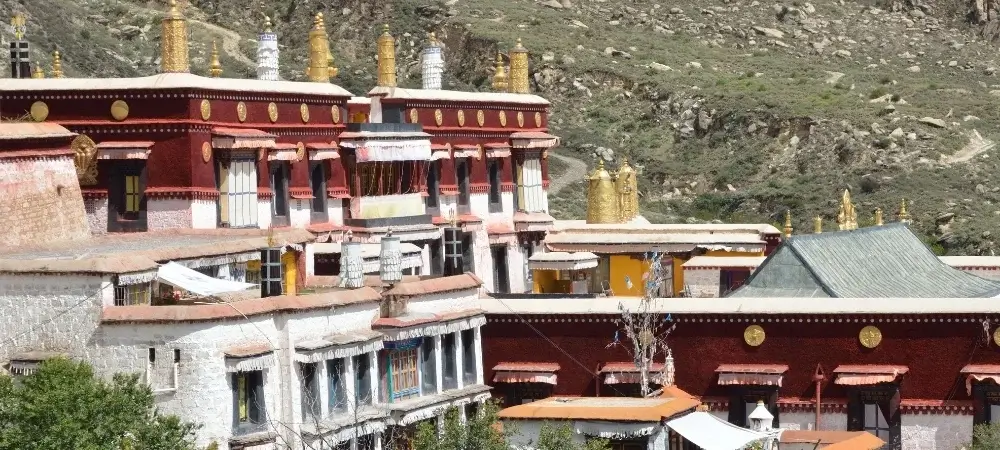
- Discover Sera and Drepung monasteries near Lhasa.
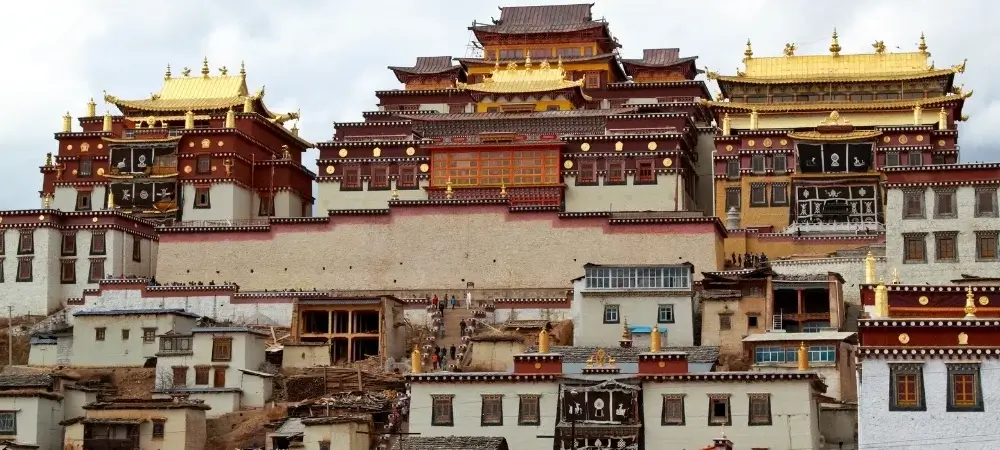
- Visit Tashilhunpo Monastery in Shigatse.
- Discover why Mount Kailash and Lake Manasarovar hold profound religious significance for pilgrims and spiritual travellers.
Mount Kailash and Lake Manasarovar require a separate, carefully planned itinerary. Access, permits, transport and physical demands differ considerably from a standard Lhasa tour.
Best Places to Visit in Tibet
Lhasa
As the principal administrative hub and a major centre of Tibetan culture, Lhasa is often the first destination for visitors exploring Tibet for the first time. The city combines historic religious architecture, traditional neighbourhoods, local markets and views of the surrounding mountains. The city provides an opportunity to visit significant Buddhist monasteries, gain insight into local religious customs and allow the body to acclimatise before continuing to other high-altitude destinations.
Top Attractions
- Potala Palace
- Jokhang Temple
- Barkhor Street
- Sera Monastery
- Drepung Monastery
Shigatse
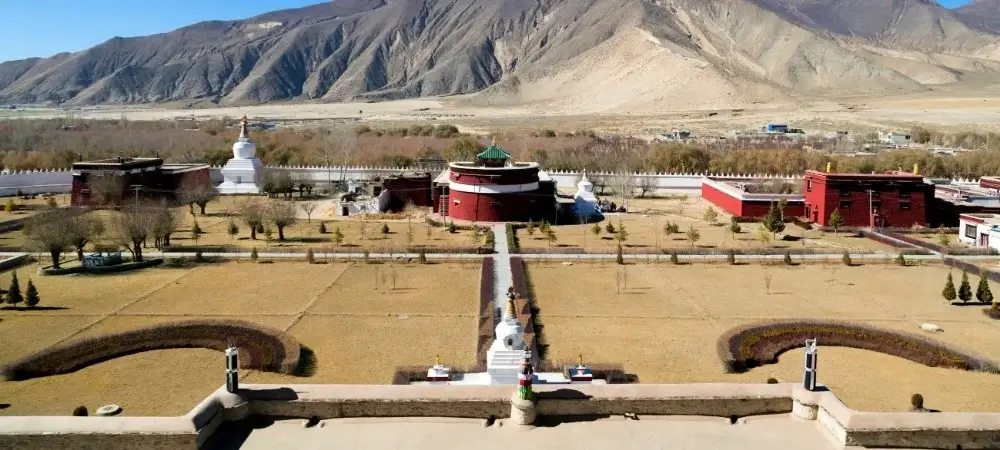
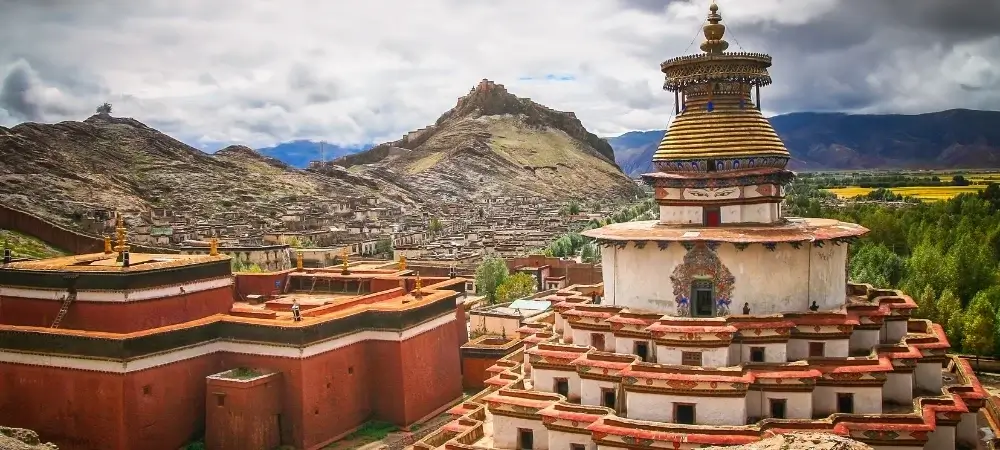
Shigatse combines religious significance with an important position on road journeys through southern Tibet towards the Himalayan region. Its main attraction, Tashilhunpo Monastery, features impressive traditional architecture, intricate Buddhist artwork and a rich historical legacy. Exploring the city and its surrounding communities also gives travellers a broader perspective on everyday life outside Lhasa.
Top Attractions
- Tashilhunpo Monastery
- Shigatse traditional markets
- Gyantse town and its historic heritage on a regional route
- High-altitude landscapes along the road towards Everest
- Local monasteries and Tibetan settlements
- Discover Gyantse's cultural landmarks and historical attractions while travelling along a scenic route through the region.
Yamdrok Lake
Yamdrok Lake is one of Tibet's best-known natural landmarks. Its striking blue-green water contrasts with the surrounding mountain slopes, creating an exceptional setting for sightseeing and photography. The lake is regarded as sacred in Tibetan Buddhist tradition, which adds cultural significance to its natural beauty.
Travellers often reach the lake by road from Lhasa, stopping at authorised viewing points along the way to appreciate the scenery. Because of the altitude, it is advisable to move slowly, wear layers suitable for changing conditions and limit physical exertion while adjusting to the elevation. Depending on the route and available travel time, the excursion may also be planned alongside nearby attractions.
Top Attractions
- Panoramic lake viewpoints
- Mountain passes overlooking the lake
- Scenic Himalayan landscapes
- Traditional settlements along permitted routes
- Photography stops overlooking the turquoise water
Namtso Lake
Namtso Lake captivates visitors with its brilliant blue surface, expansive surroundings and mountain panoramas. Its tranquil setting and unspoilt scenery make it an appealing destination for nature lovers and landscape photography enthusiasts. Revered in Tibetan religious culture, the lake is an important pilgrimage destination for devotees who visit it as part of their spiritual journeys.
Reaching Namtso generally involves a substantial road journey and a significant increase in elevation compared with Lhasa. Travellers should only visit after suitable acclimatisation and should confirm seasonal access, road conditions and any applicable restrictions before departure.
Top Attractions
- Panoramic lake viewpoints
- Nyenchen Tanglha mountain scenery
- High-altitude grasslands
- Sacred lakeside landscapes
- Photography locations along approved routes
Gyantse
Gyantse preserves much of its traditional character and is recognised for its historic fortress, distinctive streetscapes and notable Buddhist monuments. It offers a different perspective on Tibet from the larger city of Lhasa, with opportunities to explore historic religious sites and learn about the region's artistic heritage. Its position along established overland routes also makes it a useful stop on journeys through southern Tibet.
Top Attractions
- Pelkor Chode Monastery
- Gyantse Kumbum
- Gyantse Dzong
- Historic town streets
- Surrounding highland scenery
Mount Everest Region
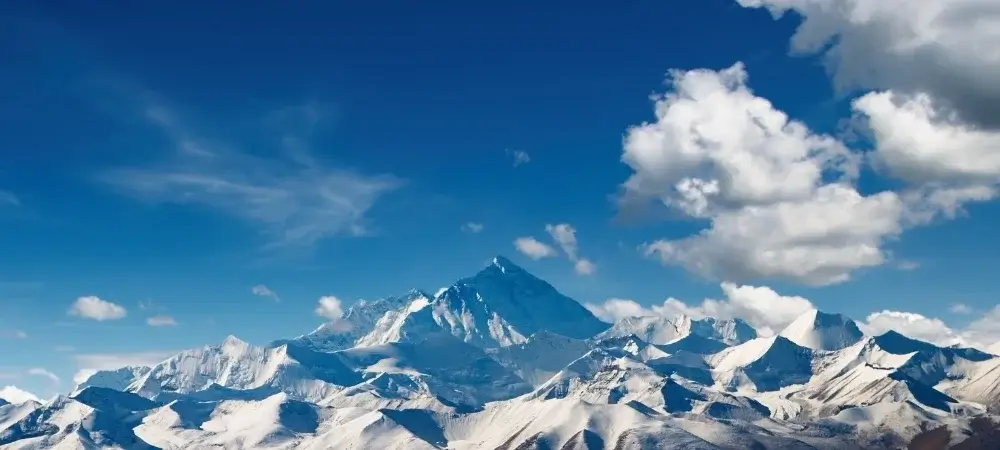
From the Tibetan side, the Mount Everest region presents spectacular mountain vistas, offering travellers the chance to admire the world's highest peak amid an imposing Himalayan landscape. Depending on the permitted route and current access conditions, travellers may visit designated viewpoints and the area around Rongbuk Monastery. The stark mountain terrain and expansive horizons make this region a major highlight for experienced travellers and landscape photographers.
Top Attractions
- Designated Mount Everest viewpoints
- Rongbuk Monastery
- Himalayan mountain panoramas
- High-altitude valleys and passes
- Landscapes around the Everest region's authorised travel corridor
Nyingchi
The Nyingchi region reveals a greener landscape than many other parts of Tibet, featuring fertile valleys, thick woodland and a rich variety of natural scenery. It is well suited to travellers who enjoy exploring the outdoors and capturing scenic views throughout the year. Spring transforms the area with seasonal blossoms, while the remaining months offer opportunities to admire winding waterways, wooded mountainsides and sweeping Himalayan panoramas.
Top Attractions
- Namcha Barwa mountain viewpoints
- Yarlung Tsangpo Grand Canyon area
- Peach blossom landscapes in season
- Forested valleys and rivers
- Local villages and cultural sites
Mount Kailash & Lake Manasarovar
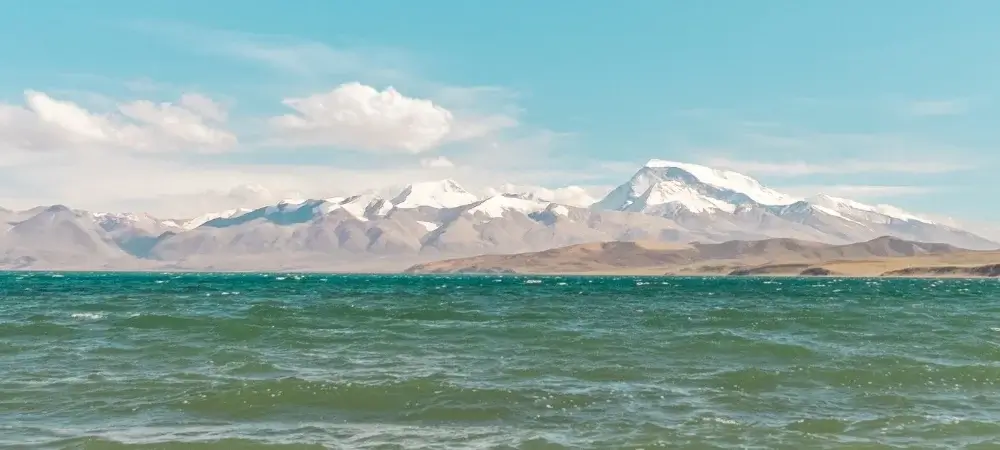
Mount Kailash and Lake Manasarovar are among the most significant pilgrimage destinations in the wider Tibetan region. Mount Kailash holds deep religious importance for several traditions, while Lake Manasarovar is revered for its spiritual associations and striking natural setting. The journey offers a different experience from the more accessible cultural circuit around Lhasa.
Top Attractions
- Mount Kailash
- Lake Manasarovar
- Sacred pilgrimage routes
- High-altitude landscapes of western Tibet
- Designated viewpoints along the authorised route
Things to Do in Tibet
An enjoyable Tibet itinerary combines visits to cultural landmarks with journeys through the region's natural landscapes, while allowing travellers enough time to acclimatise to the high elevation.
- Monastery visits: Explore historic Buddhist monasteries, religious art and traditional architecture.
- Scenic road journeys: Travel through mountain passes, lake regions and traditional settlements.
- Trekking: Choose authorised routes suitable for your fitness and acclimatisation.
- Photography: Capture the Potala Palace, mountain landscapes, lakes and cultural details.
- Local food tours: Sample momos, thukpa, tsampa and traditional butter tea.
- Shopping: Browse textiles, handicrafts and locally made souvenirs in established markets.
- Wildlife observation: Explore approved wildlife areas with experienced guides to observe local animal species in their natural surroundings.
- Festival experiences: Plan around Losar, Saga Dawa or Shoton, subject to access and current schedules.
- Religious sightseeing: Visit temples, monasteries and sacred landmarks respectfully.
- High-altitude exploration: Once you have adjusted to the elevation, explore authorised routes leading to panoramic viewpoints and mountain scenery.
Camping, rafting, paragliding and snow activities should only be included when authorised operators, suitable conditions and the necessary safety arrangements are confirmed. They are not universally available across the region.
Best Time to Visit Tibet
The right time to explore Tibet depends on your chosen destinations, travel plans, preferred activities and the seasonal conditions along your route. Spring and autumn are suitable periods for discovering cultural landmarks and capturing scenic views. Summer brings fresh greenery to many parts of the region, whereas winter may offer quieter sightseeing and clear skies in accessible areas. When organising your visit, account for extreme cold and possible seasonal restrictions that could affect access to certain destinations.
Spring (March to May)
Spring brings gradually warming days, crisp air and seasonal blossoms in areas such as Nyingchi. It is suitable for cultural sightseeing, city exploration and photography, although mornings and evenings can remain cold.
Advantages
Seasonal scenery, opportunities for photography and potentially fewer visitors than during peak summer periods.
Summer (June to August)
Summer attracts many visitors thanks to greener pastures, comparatively comfortable daytime conditions in populated areas and a calendar of cultural festivities. However, rainfall may disrupt travel in certain locations, particularly during the evening or in regions that receive more precipitation.
Advantages
Lush landscapes, extended daylight hours for sightseeing and the chance to witness traditional celebrations make this season appealing to visitors.
Autumn (September to November)
During autumn, Tibet's mountain scenery can be especially striking under clear skies, creating excellent conditions for landscape photography. September and October are worth considering for journeys along scenic roads, but the weather becomes progressively colder towards the end of the season, so suitable winter clothing is important.
Advantages
Mountain visibility can be excellent, rainfall generally decreases in many areas, and the scenery takes on autumn colours.
Winter (December to February)
Winter can offer bright sunshine, quiet streets and a closer look at everyday life in accessible parts of Tibet. However, snow, freezing temperatures and restrictions can make remote mountain excursions difficult.
Advantages
Winter travel may offer a more peaceful atmosphere in certain destinations, fewer visitors and a chance to experience Tibet's snow-covered scenery and seasonal character.
Which month is best for a Tibet trip?
For many first-time visitors, May, September and October are useful months to consider for cultural sightseeing and scenic journeys. June to August can be suitable for travellers seeking greener landscapes and festival experiences. Winter may work for a Lhasa-focused holiday, but remote destinations need additional checks.
Before confirming your Tibet holiday, check the latest entry requirements, destination access rules, road updates and weather forecasts. Changes in seasonal conditions may affect the safety or availability of excursions to high-altitude locations.
Local Festivals of Tibet
Tibetan festivals provide a window into the region's cultural identity, bringing together religious rituals, traditional melodies, artistic performances and community festivities. Since many events follow the Tibetan lunar calendar, their dates differ from year to year on the Gregorian calendar. Check the confirmed festival schedule and any visitor arrangements before finalising your travel plans.
Losar (Tibetan New Year)
Losar holds a central place in Tibetan cultural life and is widely celebrated as the traditional Tibetan New Year. Families prepare traditional food, clean their homes, visit relatives and participate in religious activities. Monasteries and communities may organise prayers, performances and other celebrations.
- Importance: The celebration welcomes a new year and symbolises renewal, togetherness among family members and the continuation of spiritual traditions.
- Celebration: Family gatherings, traditional dishes, prayers and cultural activities.
- Best time: Usually February or early March, depending on the Tibetan calendar.
- Tourist experience: Where public participation is allowed, travellers can gain insight into local family customs, festive preparations and community gatherings.
Saga Dawa
Saga Dawa holds great importance in Tibetan Buddhism as a time to honour Gautama Buddha's birth, enlightenment and transition into nirvana. At this spiritually significant time, pilgrims travel to revered monasteries and holy places to participate in religious ceremonies and follow long-established customs.
- Importance: The festival highlights the Buddhist principles of compassion, generosity and spiritual development, encouraging devotees to practise kindness and engage in acts of charity.
- Celebration: Prayer, religious offerings, pilgrimage and circumambulation of sacred places.
- Best time: Usually May or June.
- Tourist experience: Visitors may observe religious activities at accessible sites while respecting local customs.
Shoton Festival
Known as the Yogurt Festival, Shoton is a well-known annual celebration in Lhasa. Its traditional programme may include religious ceremonies, performances of Tibetan opera and gatherings that showcase the region's cultural heritage.
- Importance: Reflects the relationship between monastic traditions and community life.
- Celebration: Depending on the programme, events can include large religious-art displays, performances and communal activities.
- Best time: Usually August, although dates vary.
- Tourist experience: An opportunity to observe Tibetan performing arts and festival traditions.
Gyantse Horse Racing Festival
Gyantse and other parts of the Tibetan Plateau have longstanding horse-riding traditions. Local horse festivals can feature races, riding demonstrations, traditional clothing and folk performances.
- Importance: Celebrates horsemanship and local cultural heritage.
- Celebration: Horse races, sporting displays and community gatherings.
- Best time: Often during summer, subject to the local calendar.
- Tourist experience: Visitors can discover the importance of horses in traditional Tibetan society and learn how herding practices have shaped the region's pastoral way of life.
Butter Lamp Festival
Butter lamp observances are associated with important Buddhist dates and may be marked by lamps, prayers and religious offerings in monasteries and homes.
- Importance: Represents devotion and the symbolic dispelling of darkness.
- Celebration: Lighting lamps, chanting and making offerings.
- Best time: Dates depend on the Tibetan lunar calendar.
- Tourist experience: Visitors can observe permitted public activities quietly and respectfully.
Nature and Wildlife in Tibet
Tibet's natural environment ranges from windswept alpine pastures and marshlands to icy mountain slopes and wooded valleys, creating habitats for a variety of wildlife. Spotting animals in the wild can be a memorable experience, although many species inhabit remote areas, and sightings depend on location, season and natural conditions.
Flora of Tibet
Plant life changes considerably across the plateau.
- Alpine grasses and hardy shrubs grow across high grasslands.
- Rhododendrons and other flowering plants occur in suitable mountain habitats.
- Wetlands and lake margins support specialised plant communities.
- Knowledge of native plants and their traditional medicinal uses forms part of Tibet's longstanding cultural heritage and local practices.
- Southeastern Tibet features pockets of woodland where evergreen conifers grow alongside trees with broad leaves, adding diversity to the region's natural scenery.
Spring and summer can be especially attractive for travellers interested in flowering landscapes and greener valleys.
Fauna of Tibet
Species associated with Tibet and the wider Tibetan Plateau include:
- Tibetan antelope
- Wild yak
- Tibetan wild ass, also called kiang
- Blue sheep
- Tibetan gazelle
- Snow leopard
- Himalayan black bear in suitable habitats
- Tibetan argali
These animals occupy different habitats and are not all likely to be seen on a standard sightseeing itinerary.
National Parks & Protected Areas
Tibet's protected landscapes help preserve its fragile mountain environments, expansive grasslands and native animal populations. The Chang Tang area is recognised for wildlife adapted to the open plateau, while the ecosystems around Mount Everest and in southeastern Tibet support other forms of plant and animal life.
Access arrangements differ by area. Visitors should use permitted routes, follow local conservation rules and avoid disturbing wildlife or leaving waste behind.
Birdwatching in Tibet
Wetlands and high-altitude lakes provide habitat for a variety of resident and migratory birds. Species that birdwatchers may encounter in suitable locations include:
- Black-necked crane
- Bar-headed goose
- Ruddy shelduck
- Various ducks and geese
- Mountain and alpine bird species
For a more rewarding birdwatching experience, consider travelling with a local specialist who knows where different species gather throughout the year and which areas are subject to wildlife protection rules.
Local Cuisine of Tibet
Tibetan food is shaped by the high-altitude environment, cold winters and traditional pastoral and farming practices. Many dishes are filling and warming, making them well suited to the region's climate.
Momos
These traditional dumplings contain either vegetable or meat fillings and may be prepared by steaming or frying. They are commonly available at local restaurants and informal food outlets.
Thukpa
A hearty noodle soup prepared with broth, vegetables and sometimes meat. It is a useful choice on cold days or after a long sightseeing journey.
Tsampa
Made from roasted barley flour, this staple of Tibetan cuisine is usually combined with butter tea or other ingredients to create a filling, easy-to-prepare food.
Butter Tea
Tibetan butter tea is made by mixing tea with butter and salt, creating a rich, savoury drink that offers a different taste from the sweet teas commonly served in other regions.
Other foods to try
- Yak meat dishes: Prepared in different styles at restaurants that serve local cuisine.
- Tingmo: A soft steamed bread often served alongside savoury dishes.
- Dre-si: A traditional sweet rice preparation associated with celebrations.
- Khapse: These golden, crunchy pastries hold a special place in Tibetan food traditions and are commonly prepared for festivals, religious ceremonies and celebratory gatherings.
- Thenthuk: This hearty Tibetan dish consists of freshly shaped pieces of dough served in hot soup, often cooked with vegetables, meat and flavourful seasonings.
Larger Tibetan towns usually offer some vegetarian dishes, but menu options and preparation techniques vary from one restaurant to another. Before ordering, explain any allergies or dietary restrictions to the staff and ask about the ingredients and cooking process. During your stay, drink sufficient fluids and follow any healthcare guidance provided for travelling at high elevations.
Shopping Guide: What to Buy in Tibet
Shopping can be an enjoyable part of a Tibet holiday, particularly in Lhasa, where traditional markets and specialist stores offer textiles, crafts and souvenirs.
Popular products and souvenirs
- Tibetan textiles: Scarves, woollen items and traditional-style fabrics.
- Handcrafted jewellery: Decorative pieces sold in local markets and established shops.
- Thangka artwork: Traditional religious paintings that should be purchased respectfully and from reputable sellers.
- Handicrafts: Decorative objects, locally made ornaments and artisan products.
- Traditional clothing accessories: Souvenirs influenced by Tibetan attire, including decorative pieces that reflect regional embroidery, fabrics and traditional design motifs.
- Prayer flags: Vibrantly coloured flags used in Tibetan Buddhist traditions, often seen around monasteries, mountain passes and other spiritually significant locations.
Where to shop
- Barkhor Street, Lhasa: This popular shopping district offers an opportunity to browse local handicrafts, keepsakes and small retail stalls while experiencing the character of Lhasa's historic surroundings.
- Lhasa markets and craft shops: Useful for comparing prices and browsing a wider selection of products.
- Shigatse shops: Visitors travelling beyond Lhasa can explore local stores for souvenirs and regional products.
Shopping tips
- Compare prices before buying, particularly for jewellery and artwork.
- Ask about materials, craftsmanship and product origin.
- Respect religious significance when buying ritual or devotional items.
- Check export and customs regulations before purchasing antiques or restricted goods.
- Keep your purchases and receipts organised in a safe, secure place throughout your journey.
Travel Tips for Tibet
A trip to Tibet calls for careful planning, particularly because of its high altitude, travel formalities and remote destinations. High altitude, changing weather, long road journeys and specific entry arrangements make advance planning particularly important.
Clothing and packing
Weather can change significantly between sunny afternoons and cold evenings.
- Pack layers, thermal clothing and a warm jacket.
- Carry comfortable walking shoes with good grip.
- Bring sunglasses, sunscreen, a hat and lip balm.
- Include rain protection during wetter months.
- Carry gloves and additional insulation for high-altitude excursions.
Altitude and health
Lhasa itself is at high elevation, and many excursions climb considerably higher. Altitude sickness can affect people regardless of fitness.
- Allow time to acclimatise after arrival.
- Avoid strenuous exercise during the initial adjustment period.
- Stay hydrated and avoid alcohol during acclimatisation.
- Obtain medical assistance without delay if your symptoms intensify or become serious.
- Before travelling, consult a qualified medical professional about the potential effects of high elevation and any precautions suited to your health.
Should symptoms suggestive of altitude sickness develop, avoid gaining further altitude and consult a healthcare professional promptly. Symptoms such as a severe headache accompanied by vomiting, confusion, problems with balance or walking, or breathing difficulties while resting may signal a medical emergency. Arrange urgent medical care and descend to a lower altitude when advised or necessary.
Mobile connectivity and internet
Connectivity varies by location, network and service provider.
- Check international roaming availability before departure.
- Confirm whether your phone supports the local network.
- Carry a power bank for long road journeys.
- Check access to messaging, navigation and online services before travelling.
- Before setting off, save copies of your reservations, offline maps and essential contact information on your phone so you can refer to them in areas without network coverage.
Cash and payments
Larger hotels and businesses in urban areas may accept electronic payments, but payment options can be limited in remote locations.
- Carry a suitable amount of local currency.
- Confirm international card acceptance before departure.
- Keep cash in a secure place.
- Arrange access to funds before visiting remote areas.
- Retain emergency funds separately from everyday spending money.
Safety and local customs
- Respect photography restrictions at religious and security-sensitive sites.
- Ask permission before photographing individuals.
- Remove footwear where requested and follow monastery etiquette.
- Avoid touching religious objects without permission.
- Stay on authorised routes and follow environmental guidelines.
- Observe all local regulations and comply with the directions provided by official authorities and your approved tour guide.
Why Choose Oswal Air Travels for Tibet Tour Packages?
Planning a trip to Tibet requires careful coordination of travel arrangements, accommodation, sightseeing, permits, transportation, and altitude considerations. Known for its vast Himalayan landscapes, ancient Buddhist monasteries, sacred lakes, historic palaces, traditional settlements, high-altitude plateaus, and distinctive Tibetan culture, Tibet offers a remarkable range of travel experiences. At Oswal Air Travels, we help organise the essential elements of your journey according to your travel interests, schedule, and budget. Whether you are planning a family holiday, a couple's getaway, a cultural exploration, a spiritual journey, a photography trip, a scenic mountain vacation, or an adventure-focused itinerary, our travel specialists can help you explore suitable options. Your Tibet Tour Package can be customised according to your preferred destinations, travel dates, number of travellers, accommodation preferences, sightseeing requirements, and travel pace, subject to applicable entry regulations and permit availability.
Customized Tibet Tour Packages
Every traveller has different expectations, and we help plan personalized Tibet Tour Packages for:
- Families
- Honeymoon couples
- Couples
- Friends
- Solo travellers, where permitted
- Senior citizens
- Group tours
- Corporate groups
- Business travellers, subject to entry requirements
- Students and educational groups, subject to eligibility
- Adventure travellers
- Trekking enthusiasts
- Wildlife enthusiasts
- Heritage and history enthusiasts
- Photography enthusiasts
- Nature lovers
- Spiritual and pilgrimage travellers
- Luxury travellers
- Budget-conscious travellers
Hotel Booking
We help arrange suitable stays across your planned Tibet route, including locations such as Lhasa, Shigatse, Gyantse and Nyingchi. From budget-friendly rooms to more comfortable stays, you can explore accommodation choices that suit your travel style and spending limit. Our team helps you assess the available facilities, location convenience and amenities to find suitable options for different stops on your Tibet journey.
Our accommodation options may include:
- Budget hotels
- Standard hotels
- Premium hotels
- Luxury hotels
- Boutique hotels
- Family-friendly hotels
- Couple-friendly stays
- Business hotels
- Hotels near major sightseeing areas
- Properties offering mountain or valley views
- Traditional-style accommodation, where available
- Guesthouses in suitable locations
- Accommodation for scenic road journeys
- Stays selected according to your itinerary and acclimatisation needs
Availability, hotel standards and permitted accommodation options vary by destination and travel dates.
Flight Booking
Our travel expert assists you in identifying suitable air connections for your planned Tibet journey, taking your departure location, travel dates and authorised route into consideration. We assist with comparing available routes, airlines, schedules and fares according to your departure city, travel dates and overall itinerary. Depending on your eligibility and approved travel arrangements, your journey may involve connections through authorised entry points before continuing to Lhasa or another permitted destination.
We coordinate flight planning with your proposed accommodation, airport transfers, sightseeing schedule and onward transportation wherever applicable. Since entry requirements and travel arrangements can differ by nationality, we recommend verifying your eligibility and documentation before purchasing non-refundable tickets. Flights and connections are subject to airline schedules, availability and applicable travel regulations.
Travel Assistance
Planning a holiday in Tibet involves coordinating several travel arrangements, from selecting places to explore and booking overnight stays to organising transport along the route. With Oswal Air Travels, you can plan cultural activities that match your interests and receive guidance on the paperwork and authorisations required for your Tibet trip, making it easier to prepare for your journey.
We can assist with:
- Itinerary planning
- Airport transfers
- Local transportation
- Intercity road transfers
- Sightseeing coordination
- Hotel reservations
- Travel documentation guidance
- Permit-related planning through appropriate arrangements
- Monastery and cultural visits
- Scenic lake excursions
- Mountain sightseeing
- Photography stops
- Wildlife and nature experiences
- Trekking itinerary planning, where permitted
- Festival travel planning
- Local travel guidance
- Accommodation coordination for longer journeys
- Travel-related assistance during your trip
Tibet has specific travel and entry requirements. Foreign visitors to the Tibet Autonomous Region generally need a Tibet Travel Permit arranged through an authorised travel agency, and additional permissions may apply to certain routes. Requirements for Indian passport holders can differ according to the nature of the journey.
Professional Tour Planning
Our travel consultants help organise the important elements of your Tibet holiday, taking into account the region's high altitude, long travel distances, weather conditions and sightseeing priorities.
Our tour-planning assistance may cover:
- Customized Tibet holiday itineraries
- Lhasa sightseeing tours
- Cultural and heritage journeys
- Historic palace and monastery visits
- Himalayan sightseeing tours
- Scenic lake excursions
- Yamdrok Lake sightseeing
- Namtso Lake excursions, subject to seasonal access
- Shigatse and Gyantse sightseeing
- Mount Everest region itineraries, subject to permits and access
- Nyingchi nature and landscape experiences
- Mount Kailash and Lake Manasarovar (subject to eligibility and applicable arrangements)
- Wildlife and nature experiences
- Birdwatching opportunities
- Tibetan festival travel
- Mountain and landscape photography
- Buddhist cultural experiences
- Local market visits
- Traditional food experiences
- Trekking and hiking arrangements, where permitted
- Hotel reservations
- Flight booking coordination
- Airport transfers
- Private vehicle arrangements
- Intercity transportation
- Guided sightseeing
- Travel documentation guidance
- Itinerary coordination throughout your journey
We also recommend realistic travel schedules that allow adequate time for acclimatisation. High-altitude excursions should be planned according to your health, physical condition, route elevation and the advice of a qualified healthcare professional.
Affordable Pricing
We believe travellers should be able to plan their Tibet holiday with services that suit their preferences and budget. Our customized Tibet Tour Packages allow you to explore suitable combinations of accommodation, transportation, sightseeing and other travel arrangements according to your requirements.
The overall cost depends on factors such as trip duration, departure city, travel season, hotel category, group size, transport requirements, permitted destinations and documentation-related expenses. Remote mountain journeys and pilgrimage itineraries may require additional arrangements compared with a shorter Lhasa-focused holiday.
Tibet caters to a wide range of travel interests, with opportunities to explore its cultural heritage, visit sacred sites, enjoy mountain scenery and spend quality time on a family holiday. Whether your plans involve mountain photography, wildlife observation, trekking, historic sites, local festivals or a relaxing escape, Oswal Air Travels can assist with arranging travel services suited to your plans. From flight planning and hotel reservations to transportation, sightseeing, documentation guidance and customised tour planning, our team aims to make your journey more organised and convenient through professional travel assistance and dedicated customer service.
Plan Your Tibet Holiday with Oswal Air Travels
Discover the remarkable landscapes and cultural heritage of Tibet by combining Himalayan mountain scenery, ancient monasteries, sacred lakes, historic palaces, traditional settlements, Buddhist traditions, high-altitude plateaus, wildlife, local cuisine, handicrafts, and distinctive cultural experiences in one carefully planned journey.
Explore destinations such as Lhasa, Shigatse, Gyantse, Yamdrok Lake, Namtso Lake, Nyingchi, the Mount Everest region, and Mount Kailash and Lake Manasarovar, depending on your travel eligibility, available permits and itinerary. Discover renowned attractions such as Potala Palace, Jokhang Temple, Barkhor Street, Sera Monastery, Drepung Monastery, Tashilhunpo Monastery, Gyantse Kumbum, Yamdrok Lake, Namtso Lake, Rongbuk Monastery, and the landscapes around Mount Everest.
This combination offers opportunities to experience Tibet's mountain landscapes, religious heritage, traditional architecture, peaceful lakes, local communities, highland wildlife, scenic roads, regional cuisine and cultural traditions. Whether you are travelling for family holidays, cultural exploration, spiritual experiences, adventure, trekking, wildlife observation, photography, heritage sightseeing, or leisure, our Tibet Tour Packages can be tailored to your travel objectives and preferred pace, subject to applicable restrictions and access arrangements.
Our travel specialists can help develop a personalized Tibet Tour Package that considers your travel interests, schedule, group size, preferred destinations, hotel category, transportation requirements, sightseeing priorities, activities, and budget. From flight booking assistance and hotel reservations to airport transfers, private transportation, guided sightseeing, documentation guidance, monastery visits and itinerary coordination, we help bring the essential components of your proposed journey together.
Contact Oswal Air Travels today to discuss your Tibet holiday plans. Let us help you organise a memorable journey featuring Himalayan scenery, Buddhist monasteries, sacred lakes, historic landmarks, traditional culture, wildlife, local cuisine, and extraordinary mountain landscapes through a professionally coordinated travel experience, subject to eligibility and permit availability.
Hotels in Lhasa
| # | Property Name | Location | Category | Starting From |
|---|---|---|---|---|
| 1 | The St. Regis Lhasa Resort | No. 22 Jiangsu Road, Lhasa | ★★★★★ | $ 156.41 |
| 2 | Atour Hotel Lhasa City Government | No. 31 Middle Zangre Road, Lhasa | ★★★★ | $ 48.33 |
| 3 | Intercontinental Resort Lhasa Paradise | No. 1 Jiangsu Avenue, 850000 Lhasa, Tibet | ★★★★ | $ 85.22 |
| 4 | Shangri-La Lhasa | 19 Norbulingka Road, Lhasa | ★★★★ | $ 184.91 |
| 5 | Holiday Inn Express Lhasa Potala Palace by IHG | No. 5 West Beijing Road, Chengguan District, Lhasa | ★★★ | $ 32.07 |
| 6 | Hilton Garden Inn Lhasa | BLD1 Xianghe Yungu, No. 2 Xincun N R, 851400 Lhasa, Tibet | ★★★ | $ 53.72 |
| 7 | Fengma Feiyang Hostel | 5-1 Celinmen 1st Alley, Middle Beijing Road, Chengguan District, 850000 Lhasa | ★★ | $ 23.75 |
| 8 | 7 Days Inn Lhasa Potala Palace Branch | No. 15 Niangre Road, Chengguan District, Lhasa | ★★ | $ 29.36 |
Hotels in Shigatse
| # | Property Name | Location | Category | Starting From |
|---|---|---|---|---|
| 1 | Hilton Shigatse | 12 Shanghai Middle Road, Shigatse, 857000 Xigaze | ★★★★★ | $ 107.45 |
| 2 | Wangrun Hotel | Xigezi Pedestrian Street, Shigatse | ★★★★ | On Request |
| 3 | Qomo Langzong Hotel | Junction of Shanghai Middle Road and Zhufeng Road, 857000 Shigatse | ★★★★ | On Request |
| 4 | Ji Hotel Shigatse Zhabu Lubu Temple | 16 Qingdao Road, Sangzhuzi District, Shigatse | ★★★ | $ 52.49 |
| 5 | Tashi Choeta Hotel | No. 2 Xueqiang Road, 857000 Shigatse, Rikaze | ★★★★ | On Request |
| 6 | Gesar Hotel | Intersection of Longjiang Road, Rikaze | ★★★★ | On Request |
| 7 | Jiumuyamei International | North Jilin Road, 3, Xigazê, Shigatse | ★★★ | On Request |
| 8 | Shigatse Tashilhunpo Temple Magnolia Hotel | 8 Shanghai Middle Road, Samzhubze, Shigatse | ★★★ | On Request |
| 9 | 7Days Sunshine Shigatse Jilin Road | Jilin Zhong Road, No. 31, Shigatse | ★★ | On Request |
Note
- Oswal Air Travels offers many more hotels at every destination.
- The hotels listed above are only a selection of our available accommodations.
- For the complete list of hotels, please speak with our travel experts while booking.
- Hotel rates are starting prices per room per night in Euro (EUR) and are subject to availability and change at the time of booking.
- Prices may vary depending on your travel dates, season, weekends, public holidays, festivals, and special events.
- Final prices depend on the room category, hotel occupancy, and availability at the time of confirmation.
- Prices are based on standard occupancy. Additional charges may apply for extra adults, children, or extra beds.
- Hotel rates are dynamic and may change without prior notice due to supplier or hotel pricing updates.
- The displayed rates are for reference only. The final price will be confirmed at the time of booking.
- Promotional offers, early booking discounts, and last-minute deals may affect the final room price.
- Prices may vary depending on currency exchange rate fluctuations if payments are made in a different currency.
- Hotel availability is not guaranteed until the booking is confirmed and payment is received.
Terms & Conditions
The travel business is dynamic and subject to frequent changes. Oswalairtravels.com serves customers with diverse travel requirements and has established the following terms and conditions to ensure transparency and smooth service delivery.
Oswalairtravels.com acts only as an intermediary between clients and third-party service providers such as airlines, hotels, transport operators, and other travel partners. Oswalairtravels.com cannot be held responsible for any deficiency, delay, cancellation, or service-related issue caused by these service providers.
In the event of a natural calamity, including but not limited to floods, pandemics, earthquakes, or other unforeseen circumstances, if a trip is cancelled or postponed, any compensation or refund to the client will depend entirely on the amount received from the respective service provider. If no compensation is received by Oswalairtravels.com, no refund or compensation can be provided.
If, due to unavoidable circumstances, there is a change in the hotel, destination, or accommodation, clients are required to accept the alternate arrangements. Images displayed on the Oswalairtravels.com website are for illustrative purposes only and may differ from the actual property or destination due to image enhancement or technological editing.
No travel package, booking, or reservation will be confirmed until full payment has been received. Any verbal commitment or assurance will not be considered valid unless confirmed in writing by Oswalairtravels.com.
If a hotel changes or upgrades the room category because of non-availability of the originally booked room, Oswalairtravels.com shall not be held responsible for such changes.
For group tours, if the required minimum number of participants is not achieved, the departure may be cancelled. In such cases, Oswalairtravels.com will refund the actual amount received from the service providers. If clients choose to join the next available group departure instead of accepting the refund, they will be required to pay any applicable fare difference.
Early check-in and late check-out at hotels are subject to availability and the hotel's policies. Oswalairtravels.com does not guarantee these facilities.
If a package is cancelled, missed, or disrupted due to the client's personal reasons, Oswalairtravels.com will not be financially responsible for any resulting losses or refunds.
Where an extra bed is included in the package, hotels generally provide only a mattress unless otherwise specified.
During travel in high-altitude regions, the air conditioning system of the vehicle may remain switched off for operational and safety reasons.
Clients are responsible for disclosing any existing medical conditions before the commencement of the tour. Oswalairtravels.com shall not be liable for any health-related incident arising from undisclosed medical conditions.
Oswalairtravels.com is not responsible for the rejection of any travel insurance claim due to incomplete documentation, incorrect information, or failure to meet the insurer's or supplier's requirements.
If a client misses their scheduled flight, resulting in the cancellation or loss of the tour, the booking will be treated as completely non-refundable. No date change or rescheduling option will be available in such cases.
For helicopter rides included in any package, Oswalairtravels.com does not guarantee any specific departure time or time slot. If a client misses the allotted ride, no refund or compensation shall be payable.
Oswalairtravels.com is committed to providing the services mentioned in the booking voucher. If any confirmed service is not delivered by the supplier, clients must notify Oswalairtravels.com immediately during the trip. Complaints made after completion of the tour may not be considered for financial adjustment or compensation.
If a client causes any loss or damage to the property of a hotel or any other service provider, the client shall be solely responsible for compensating the concerned party. Oswalairtravels.com will not be liable for such losses.
If hotel management or local authorities conduct room inspections or security checks, clients are required to cooperate. Such inspections are beyond the control of Oswalairtravels.com and cannot be objected to on its account.
If a dispute arises between the client and any service provider, Oswalairtravels.com will provide reasonable assistance wherever possible. However, Oswalairtravels.com will not be required to travel outside Delhi or participate in legal proceedings at other locations.
Clients having any complaint are requested to inform the legal team or senior management of Oswalairtravels.com at least ten working days before initiating any legal action or filing a formal complaint.
Any legal dispute arising out of the booking or services provided by Oswalairtravels.com, other than the matters stated above, shall be subject exclusively to the jurisdiction of the courts in Delhi.
Package prices are based on real-time availability of flights, hotels, transportation, and other travel components. Prices are subject to change until the booking is confirmed and full payment has been received.
GST will be applicable in addition to the quoted charges for all services.
Frequently Asked Questions
May, September and October are often suitable for cultural sightseeing and scenic journeys, although conditions vary by location. Summer offers greener landscapes and festival opportunities, while winter can be quieter in accessible areas. The best month depends on your intended route, altitude tolerance, weather preferences and whether you want to attend a particular festival.
The cost depends on your departure city, trip duration, accommodation, transport, group size, permits and sightseeing plans. A short city-focused itinerary will generally require a different budget from an extended Everest-region or western Tibet journey. Request an itemised quotation that identifies included services, additional charges, cancellation conditions and any expenses you must arrange independently.
Tibet can suit families when the itinerary accounts for altitude, medical needs, travel time and children's comfort. A slower-paced trip centred on Lhasa may be more manageable than a demanding mountain route. Discuss the ages and needs of all travellers with your tour planner, allow time for acclimatisation and obtain appropriate medical advice before confirming the journey.
Couples seeking a memorable getaway can explore Tibet for its dramatic Himalayan landscapes, distinctive traditions, scenic photography spots and tranquil settings. A honeymoon itinerary can combine Lhasa's historic landmarks with scenic lake viewpoints and comfortable accommodation, subject to travel permissions. Since altitude and long road journeys can be challenging, couples should prioritise a relaxed schedule rather than attempting too many remote destinations in a short period.
Depending on local permissions and conditions, travellers can enjoy trekking, scenic mountain drives, photography and outdoor exploration. Some longer routes require specialist preparation and considerable physical fitness. Activities such as rafting, paragliding or mountaineering should never be assumed to be available. Confirm authorised operators, safety arrangements, seasonal access and altitude requirements before adding adventure activities to your itinerary.
Popular Tibetan foods include momos, thukpa, thenthuk, tsampa and butter tea. You may also find yak meat dishes, steamed bread and traditional festival sweets. Menus vary between cities and remote settlements, and vegetarian options may be more limited outside major towns. Travellers with allergies or dietary restrictions should confirm ingredients and preparation methods before ordering.
Common souvenirs include textiles, scarves, handicrafts, jewellery, prayer flags and traditional-style artwork. Barkhor Street in Lhasa is a well-known area for browsing local shops. Compare prices, ask about materials and buy from reputable sellers. Religious artefacts, antiques and products made from protected wildlife may be subject to restrictions, so check applicable rules before making a purchase.
Many itineraries combine flights or trains to authorised entry points with pre-arranged road transport. Lhasa is a common starting point for sightseeing, while destinations such as Shigatse, Yamdrok Lake and the Everest region involve overland journeys. Foreign visitors generally need appropriate permits and authorised arrangements for travel within the Tibet Autonomous Region. Confirm the requirements for your nationality before booking.
Tibet generally has strong sunshine, low humidity in many areas and substantial temperature differences between day and night. Tibet experiences different climatic conditions throughout the year, depending on the elevation and time of year. Lower-elevation towns may experience relatively pleasant summer days, but mountain areas often stay chilly. Winter can bring severe cold, while rainfall during wetter periods may disrupt road travel in certain regions. Pack layers, sun protection and suitable footwear, and check local forecasts before travelling to remote areas.
Inclusions depend on the customised itinerary and the services available for your route. Depending on the package selected, the price estimate may include hotel stays, transfers, sightseeing arrangements and guide support, along with meals or travel-document assistance where these services are specifically mentioned. Flights, insurance, permit-related costs and other expenses may be included or excluded depending on the package. Ask for a written breakdown of inclusions, exclusions and booking conditions before confirming.
Bank Details

Account No : 10006551924
Bank Name : IDFC First Bank
Branch : DLF Capitol Point, CP Branch
IFSC : IDFB0020101
Account Name : OSWALAIRTRAVELS.COM
SWIFT Code : IDFBINBBMUM
Scan & Pay